Wednesday, May 30, 2018

VirtualBox on Windows 10 (surprisingly painful)

Go to start of metadata

After a week worth of effort to get this working but HyperV though disabled, was causing issues where the CentOs VM in VirtualBox reported following during startup. VT-X also was enabled in BIOS.
00:00:08.071077 HM: HMR3Init: Falling back to raw-mode: VT-x is not available
00:00:08.136616 CPUM: SetGuestCpuIdFeature: Enabled Hypervisor Present bit
00:00:08.982281   HTT - Hyper-Threading Technology                        = 0 (1)
00:00:08.982309   HVP - Hypervisor Present (we're a guest)                = 1 (1)
00:00:09.032906 VMSetError: Raw-mode is unavailable courtesy of Hyper-V.
00:00:09.048381 Power up failed (vrc=VERR_SUPDRV_NO_RAW_MODE_HYPER_V_ROOT, rc=E_FAIL (0X80004005))

Following PowerShell command reported True, which shouldn't be the case as HyperV is disabled using "Turn Windows features on or off", "bcdedit /set hypervisorlaunchtype off" and "PS C:\> Disable-WindowsOptionalFeature -Online -FeatureName Microsoft-Hyper-V-All"
PS C:\> (gcim Win32_ComputerSystem).HypervisorPresent

Then I came across this post and disabled Device Guard using DG_Readiness_Tool_v3.4. Hooray !! CentOS starts with no issues.

Wednesday, May 09, 2012

Struts2 - DISABLED vs READONLY

Lucky learning for today before I spent few hours nail biting on this !!

A struts2 form with input textfields with disabled=true, do not get posted on submit; whereas readonly=true, do get posted; so use them wisely.

Monday, June 13, 2011

The Tuxnetworks Linux Bible: DEPRECIATED: Setting the hostname in gnome termina...

The Tuxnetworks Linux Bible: DEPRECIATED: Setting the hostname in gnome termina...: "If you SSH to another host you might want to display the hostname of the remote host in the gnome terminal title bar Put this code in your ..."

Do this for all hosts you ssh to, as well.

Monday, February 14, 2011

Eclipse deleting svn all-wcprops and entries files

I even switched from desktop to laptop to get away from this issue .. but obviously it "followed" me.

This post regarding MyEclipse lead me to the fix which is to remove following from your .project.
org.eclipse.wst.jsdt.core.javascriptValidator
org.eclipse.wst.jsdt.core.jsNature

Wednesday, August 04, 2010

Get the "Synchronize with Google" option to show up in Mac OS X Address Book.

Thanks to this post in macosxhints forum, I could keep my Nexus One is sync with Google and MBP. Quoted below from the forum post.

a) If you don't have this file, copy the following into a text file and save it with the name com.apple.ipod.plist. Put the file in your Preferences directory inside your home directory.

{ Devices = { red-herring = { 'Family ID' = 10001; }; }; }

b) If you have the file and don't have an iPhone or iPod touch, you need to add some information to this file. I used Apple's plist editor to add the information, and that worked for me. This terminal command should work as well.

defaults write com.apple.iPod Devices -dict-add red-herring '{ "Family ID" = 10001; }'

Monday, August 02, 2010

An application based on Spring / JPA / Hibernate stack started causing following error when the Oracle JDBC library was upgraded from ojdbc14.jar to ojdbc6.jar.

java.lang.IllegalAccessException: Class org.hibernate.dialect.Oracle8iDialect can not access a member of class oracle.jdbc.driver.OracleTypes with modifiers ""
at sun.reflect.Reflection.ensureMemberAccess(Reflection.java:65)
at java.lang.Class.newInstance0(Class.java:349)
at java.lang.Class.newInstance(Class.java:308)
at org.hibernate.dialect.Oracle8iDialect.registerResultSetOutParameter(Oracle8iDialect.java:367)

Caused by oracle.jdbc.driver.OracleTypes class being deprecated and replaced by oracle.jdbc.OracleTypes and Oracle8iDialect (line 397) class referring to a private member of OracleTypes class.

  1. Fix is to use a hibernate distro with the fix that is also compatible to Spring 3 stack.
  2. Thanks to Google and grepcode; found the fix been applied for Hibernate 3.3.2 (line 432)
  3. Also realized in this research that there exists NO spring-framework-3.0.3.RELEASE-dependencies.zip at Spring download site :-;( which makes it all the more difficult to find a spring bundle with the fix.

Thursday, December 10, 2009

Shashi Tharoor on India's 'soft power'

Shashi Tharoor on India's 'soft power' - wow what a take from Shashi Tharoor about India's soft power. 3 cheers to Shashi Tharoor.

Tuesday, December 08, 2009

CNTLM@work

It had been a pain in the wrong place for a while at work where my desktop is behind a ISA proxy with authentication and I could not figure a way to get the proxy settings to work on a Ubuntu (Hardy Heron).

Then I googled and came across CNTLM which is a beauty; follow the instructions to install and configure it, set proxy to localhost:3128 and thats it.

I am doing a Synaptic update as I type this .. from now on I will be on top of the latest ubuntu and like software updates.

3 cheers to CNTLM.

Sunday, June 07, 2009

My VOIP just got better ..

I recently switched by ISP (TPG to Beagle Internet) mainly for ADSL 2+ service. Beagle did not provide VOIP and therefore and also for service decoupling reasons I subscribed to MyNetFone service. I am pretty happy with the service for the call costs primarily to India & USA.

I often do conference calls from home and been looking for ways to use the laptop's mic and speakers as the handsfree. Finally I found the solution. The solution is to ..
  1. Use a Soft phone, configured for the VOIP provider, on my laptop. I found X-Ten X-Lite working just fine on my MacBook Pro and would imagine same on Dell XPS Studio / Vista / Win7 as well. See instructions here.
  2. I found this post with a working Apple Script to integrate Mac's Address Book to X Lite. This way I can right-click and dial a number from the Address Book. Cool ha .. Same script copied below here for convenience and as backup in the this post vanish in future.

    using terms from application "Address Book"
    on action property
    return "phone"
    end action property

    on should enable action for thePerson with theEntry
    if theEntry is not missing value then
    return true
    else
    return false
    end if
    end should enable action

    on action title for thePerson with theEntry
    return "Mit X-Lite wahlen"
    end action title

    on perform action for thePerson with theEntry
    set thePhoneNumber to value of theEntry
    set theolddelimiter to AppleScript's text item delimiters

    set AppleScript's text item delimiters to "(0)"
    set thePhoneNumber to every text item of thePhoneNumber
    set AppleScript's text item delimiters to theolddelimiter
    set thePhoneNumber to thePhoneNumber as text

    set theNewPhoneNumber to ""

    repeat with a from 1 to length of thePhoneNumber
    set theCharacter to character a of thePhoneNumber
    if a is 1 and character a of thePhoneNumber is "+" then
    set theNewPhoneNumber to theNewPhoneNumber & "0011"
    end if
    if "0123456789" contains theCharacter then
    set theNewPhoneNumber to theNewPhoneNumber & theCharacter
    end if
    end repeat

    tell application "X-Lite"
    activate
    tell application "System Events"
    tell process "X-Lite"
    -- delete eventually existing number
    keystroke ""
    keystroke return
    -- dail
    keystroke theNewPhoneNumber
    keystroke return
    end tell
    end tell
    end tell
    return true
    end perform action
    end using terms from


  3. Moreover I could use Soundflower / Audacity like tools to record the call in case if required or when times I am meant to take notes. This I see as a big bonus. Yet to try this on Windows platform.

Sunday, June 15, 2008

The Indian Orthodox Church - A Brief History

- Sourced from M.G.O.C.S.M1 publications
The Indian Orthodox Church also known as the Malankara Orthodox Church, is an ancient Church of India and it traces its origin to as far back as A.D 52 when St.Thomas one of the disciples of Jesus Christ came to India and established Christianity in the South Western part of the sub-continent.

The St. Thomas Christians or the Syrian Christians exist at present in different churches and denominations. But a major section of the parent body of St. Thomas Christians which has maintained its independent nature constitute the Indian Orthodox Church under the Catholicate of the East with headquarters at Devalokam, Kottayam, Kerala, India.

The beginning of the Church
That the Apostle Thomas, one of the Twelve, is the founder of the St. Thomas Christians has been well established. Christian writers and representatives of the Churches at least from the 4th century refer to the evangelistic labours of the Apostle Thomas in India and the Indian Christians ascribe the origin of their Church to this event in the first century.

It is reasonable to believe that the Apostle came to India, preached the Gospel, established the Church and died here as Martyr. Tradition has it that the Apostle Thomas established Seven Churches in Kerala and appointed Priests for them from 4 families.
The Persian Connection
The Indian Church came in contact with the East Syrian Church possibly from the 4th century. There is evidence that in the 8th century the Indian Church had its primate known as "The Metropolitan and the Gate of All India" a title adopted presumably under Islamic influences. The Vatican Codex 22, written in Cranganore in 1301 gives the title as "The Metropolitan of the Throne of St. Thomas and of the whole Church of the Christian India".
The Indian Church maintained its autonomous administration. The Church of Persia had a tradition which acknowledged autonomy of Churches in its communion abroad. The Church in Kerala continued as an administratively independent community till the 16th century.

The Portuguese Period
Things changed during the Portuguese period. The missionaries who came from abroad were eager to bring the Indian Church into communion with Rome. They worked on it almost throughout the 16th century. In 1599 by the Synod of Diamper, the assembly of representatives from churches was forced to give up the Indian Church's connection with the Patriarch of the Persian Church in favour of the Pope of Rome. But there was dissatisfaction among the people which led to a general revolt in 1653 known commonly as the Coonan2 Cross revolt. Portuguese efforts to put it down by force did not succeed. Now Rome entered the field directly through missionaries, and a section of those who rebelled went back to Roman allegiance.

A body of the people led by the Archdeacon, who stood for the administrative autonomy of the Indian Church inspite of serious difficulties, was determined to keep the independence of the Indian Church. The Portuguese were in fact instrumental in causing a division in the one united church in India. Although they succeeded in getting the allegiance of a party in the Church to the Roman Catholic community, an equally important party did not follow their way.

The Antiochene connection
The party that sought to preserve the Church's freedom appealed to several Eastern Christian Centers for help in restoring its episcopal succession. The Antiochene Syrian Patriarch responded and sent to India a Bishop, Metropolitan Mar Gregorios of Jerusalem who came to India in 1665. The Archdeacon who had been declared in the meantime to be Metropolitan Mar Thoma by the laying on of hands by 12 Presbyters was now confirmed by him in his episcopal rank and both of them worked together to organize the church on a firm footing. Mar Thoma I was followed in succession by a series of Prelates with the same name till 1816 when the last of them namely Mar Thoma IX came to the scene, but was soon replaced by Mar Dionysius II.
Malankara Orthodox Church had felt the need of assistance for establishing systematic education for its clergy, teaching the people the faith, instructing the clergy in properly celebrating the liturgical services and above all assistance in the maintenance of the episcopal succession intact. But the Orthodox Church maintained its autonomous administration and life under local leadership. Even the help from the Antiochene Syrian Patriarch was without any idea of formally submitting to his jurisdiction but only for an overall spiritual supervision and for keeping friendly relations.

There were differences of opinion over the authority of the Patriarch in the Malankara Church and it created certain difficulties. But the Church has always been successful in maintaining its freedom and never allowed any foreign domination.
Co-operation with the Church Mission Society (C.M.S)

By 1795 the British established themselves in South India and Kerala came under their sway. During the time of Col. Munroe who was the British Resident in Kerala, Pulikottil Ittoop Ramban expressed his interest in founding a Seminary for the teaching of the Church's Clergy. The Resident supported him and the seminary was founded in 1815. Pulikottil Ittoop Ramban became a Bishop - Metropolitan Mar Dionysius II.

From 1816 the experiment of cooperation between the Malankara Church and the C.M.S of the Anglican Church was carried on, but it was found to be unsuccessful and was called off in 1836.

This incident led to the division of the community into three bodies. One of them, a reformed group tried to make serious reforms in the liturgy and practices of the Church as a whole but failed. After about half a century of conflict within the church this body had to withdraw and organize itself as the Mar Thoma Syrian Church. A small body of the Syrian Christians opted to join with the missionaries and be absorbed in the Anglican Church. The majority of the community continued in the Church without accepting the reforms.
Catholicate established in Malankara in 1912

In this conflict the Metropolitan obtained the support of Patriarch Mar Abdul Messiah the immediate successor to Patriarch Peter III. Patriarch Peter III was succeeded in 1895 by Mar Abdul Messiah. Because of state interference, he lost his position in Turkey and came to be replaced by Mar Abdullah. While Metropolitan Mar Dionysius VI clashed with Mar Abdullah, the Canonical senior Patriarch Mar Abdul Messiah offered to come to the assistance of the former. Thus in 1912 he came to Kerala and associated with Mar Dionysius VI and the Bishops and the Church with him, to establish the Catholicate of the East in Malankara. The ceremony was held at St. Mary's Church, Niranam on 15th September 1912; Niranam Church is one of the seven Churches founded by St. Thomas during his visit here in the first century.
The Catholicate of the East was thus established in Malankara with the co-operation of the Canonical Patriarch Mar Abdul Messiah who was senior to Mar Abdullah. Thereby the Patriarch himself has withdrawn his right of spiritual oversight if any in the Indian Church, which the Royal Court of Appeal had acknowledged for him in 1889.

The designation "Catholicos of the East" to the successors of St. Thomas the Apostle was given by the Jerusalem Synod of AD 231. The head quarters of the Orthodox Church of the East was first at Uraha (Edessa) in Persia. This was moved to 'Selucia' and it was there the tittle "Catholicos of the East" originated. Catholicos is an ecclesiastical dignitary recognized in the Antiochene Syrian Church also. He is equal in rank with the Patriarch though the latter is considered as first among equals (primus interparees).


Constitution of the Church adopted in 1934

Malankara Orthodox Church is now administered as per the constitution adopted in 1934 which was passed by the Malankara Syrian Christian Association. The Association is a fully representative body of the Church with elected members-priests and laymen-from all the Parish Churches. One Priest each and laymen 1 to 10 depending on the number of members in each parish are members of the Association. There are about 1400 parishes under Malankara Orthodox Church. It is the Association which elects the Catholicos and Malankara Metropolitan and also the Bishops.

There is a Managing Committee for the Association with members from each Diocese elected by the Association. The Malankara Metropolitan is the President of the Managing Committee and the remaining Prelates having administrative charge are the Vice-Presidents.
The Association Managing Committee has a Working Committee with the Malankara Metropolitan as its President. The Working Committee is also the Consultative Committee of the Malankara Metropolitan.

The Episcopal Synod has all the Prelates of the Malankara Church as members. Matters concerning Faith, Order and Discipline are under the authority of the Episcopal Synod. It is the Episcopal Synod which installs the Catholicos.


Current State

The Indian Church has an Apostolic foundation. Now with the establishment of the Catholicate in 1912 the Orthodox Church has come to its own. The canonised saints of our church are St.Gregorios of Parumala, St.Dionysius and St.Baselios. Although majority of the members of the church numbering about 2.5 million live in Kerala, they could be found now spread over not only in all the different states of India, but also in all the continents through out the world. There are a total of 25 Dioceses now, 19 of them in Kerala and 6 of outside Kerala i.e., Madras, Bombay, Calcutta, Delhi, America and the Diocese of Canada-UK-Europe. Parishes outside India, other than those in the two Dioceses of America and Canada-UK-Europe are included in the four dioceses of Madras, Bombay, Calcutta and Delhi. The St.Mary's Indian Orthodox Church, Melbourne belongs to the Diocese of Madras. The Indian Orthodox Church is hence an ancient, autonomous, independent Indian Church whose Supreme Head is His Holiness The Catholicos of the East and Malankara Metropolitan.

Thursday, February 28, 2008

VirtualBox on Mac saved me !!

Recently I quit Oracle and therefore I re-imaged my MacBook Pro to get rid of VMWare and few other such baggages I was carrying along with I lost my virtual machines with Oracle 10g database installed.

Renny was stuck with some Oracle Stored Procedure issue and she wanted to get Oracle 10g running on my laptop. And I had 0 time to get it going. There have not been any Mac releases of Oracle Database lately. So I am momentarily stuffed.

My options were to get VMWare Fusion, Q.app (qemu for Mac) or VirtualBox. Last time I tried VirtualBox I was getting error when I startup the guest OS. But thought will it a try ...

There comes VirtualBox to wrap Ubuntu Gutsy Gibbon, Oracle XE 10g. All took about 30 minutes to get started, incl. downloads. I preferred to run only the database from within the guest OS and run Eclipse, SQL Developer etc from Host OS which is Mac OS X in this case. Now the stumble was with the networking in VirtualBox which by default is NAT/NAPT. So no IP Address assigned to host OS so that I can make a TCP connection from host to guest (whereas vice-versa works fine).

Bit of a Googling and the VirtualBox User Manual introduces me to VBoxManage using which you can add port forwarding to guest OS settings whereby a port connection on host is forwarded to mapped port on guest. So using following commands I was able to set this up for TNS listener and worked like a charm when tested with SQL Developer running on host.

VBoxManage setextradata "Ubuntu 7.10" "VBoxInternal/Devices/pcnet/0/LUN#0/Config/tns/Protocol" TCP
VBoxManage setextradata "Ubuntu 7.10" "VBoxInternal/Devices/pcnet/0/LUN#0/Config/tns/GuestPort" 1521
VBoxManage setextradata "Ubuntu 7.10" "VBoxInternal/Devices/pcnet/0/LUN#0/Config/tns/HostPort" 1521


All is good that ends good .. And they lived happily ever after !!

Thursday, February 21, 2008

I like to see Groovy to be something like Forte 4GL

Forte 4GL (known later as Unified Development Server [UDS]) as the name says a Fourth Generation Language. The language used is Transaction Object Oriented Language (TOOL). Sun Microsystems bought this from Forte Inc. and I would say sun set on this now.

Take a look at the TOOL Reference Manual to see how simple and easy the semantics are. The complete documentation set is available at http://docs.sun.com/app/docs/coll/S1_UnifiedDevelopmentServer_35.

Coming to the point, I like to see Java mature to a stage where it can complement Groovy to be a 4GL and have tools to develop applications like how it is done using Forte Workshop.

Forte Workshop (IDE) got to its own proprietary Version Control, Configuration Management and Middleware container. The above said tool could be based on Eclipse (IDE), Subversion (Version Control), OSGI (Configuration Management) and Apache Felix + EJB (Middleware container).

Only if someone could kick start something like this ..

Tuesday, February 05, 2008

Keywords I like to cover during IT session to our church folks

basic internet, virus, firewall
ADSL flavors, IP Phony, Skype
podcasts, simulcasts, webcasts,Feeds, RSS, ATOM google services
portal, Web 2, Ajax, RIA, Blogging, wiki
DVI, HDMI, Media Station, HD DVD, HD TV, Blue Ray
USB, Firewire, PCMCIA

Thursday, January 10, 2008

Hiccups with PHP5 and xdebug on RHEL

Root cause of all this was that /usr/ filesystem is Read-only; so I had to compile binaries to install on writable area. So i did the following.

1. Executed the following from php source root folder; this installed the php binaries under --prefix location
./configure --prefix /scratch/asamuel/projects/opensource/php-5.2.5/install
make
make install


2. Executed the following from xdebug source root folder
/scratch/asamuel/projects/opensource/php-5.2.5/install/bin/phpize
./configure --enable-xdebug --with-php-config=../../php-5.2.5/install/bin/php-config
make


3. Copied /scratch/asamuel/projects/opensource/php-5.2.5/php.ini-recommended to /scratch/asamuel/projects/opensource/php-5.2.5/php.ini

4. Modified php.ini to load xdebug extension and enable remote debugging using
zend_extension="/scratch/asamuel/projects/opensource/xdebug/xdebug-2.0.2/modules/xdebug.so"
xdebug.remote_enable=On


3. Verified the build using (where alias php5=/scratch/asamuel/projects/opensource/php-5.2.5/sapi/cli/php -c /scratch/asamuel/projects/opensource/php-5.2.5/php.ini $*)
php5 -v
which resulted
PHP 5.2.5 (cli) (built: Jan 10 2008 12:52:19)
Copyright (c) 1997-2007 The PHP Group
Zend Engine v2.2.0, Copyright (c) 1998-2007 Zend Technologies
with Xdebug v2.0.2, Copyright (c) 2002-2007, by Derick Rethans

Tuesday, January 08, 2008

Hiccups with Oracle Database

The Oracle Database installation and interfaces (sqlplus like) have improved heaps from what I can remember from the days of 8i version. With Oracle XE, installation is so simple that even a pre-teen can do it. But still you cud hit stumbles like following one(s) and takes bit of googling for find you way out.

1. Unable to access Apex (formerly HTMLDB) application remotely.

The apex service by default (as on 10g) will be running at port 8080 and is accessible locally using http://localhost:8080/apex; but due to security-by-default policy it is not accessible remotely using http://myhost.mydomain:8080/apex. To enable it login, using sqlplus or sqldeveloper as sysdba and execute the following.

exec dbms_xdb.setListenerLocalAccess(false);

More hiccups to follow as and when encountered.

Monday, December 17, 2007

Could Not Open Default Font 'Fixed' - Linux

This is a #@%$^ of a problem; I fix it every time and forgets the fix; so its time to blog it.

Fix is as simple as creating a symlink to /usr/share/fonts/X11/ as /usr/share/X11/fonts, ie, from command prompt do

ln -s /usr/share/fonts/X11/ /usr/share/X11/fonts

Sunday, December 16, 2007

A cool example of MVC Pattern

MVC (Model-View-Controller) can be bit confusing for some. I like to demonstrate same using a simple example here.

Open my resume [not my latest, if you interested in my latest resume here it is :-)] in any xml-friendly browser such as Firefox and see how the XML is rendered.

Explanation:-
1. The xml file is the Model in this case; which contains structured data.
2. The resume.xsl is the Controller which translates this xml to HTML, the View, which gets rendered in the browser user interface.

Note that the Model is not coupled with View and Controller is the binder of the Model to the View.

Monday, November 19, 2007

Playing MMS content using mplayer in Linux behind proxy

It took me a month of fiddling to figure this out. Finally succeeded with
thanks to: How to play ASX using Mplayer
Ubuntu Gutsy
MPlayer

Here is what I did
1. created /etc/mplayer_proxy.sh and chmod +x
/usr/bin/mplayer http_proxy://proxyHost:proxyPort/$*

2. created /etc/mplayer.radios with following content
alias 774='/etc/mplayer_proxy.sh mms://media3.abc.net.au/774melbourne'
alias mmm='/etc/mplayer_proxy.sh mms://66.70.119.243/ads/slate_intro04_200.wmv'
alias surya='/etc/mplayer_proxy.sh mms://87.106.139.40/surya_tv_streaming_only_on_keralabeats'
alias hitfm='/etc/mplayer_proxy.sh mms://wm-live.abacast.com/arabian_radio-hitfm-24'
alias classicfm='/etc/mplayer_proxy.sh mms://media3.abc.net.au/classicfm'
alias foxfm='/etc/mplayer_proxy.sh mms://66.70.119.243:81/FoxFM'
alias news='/etc/mplayer_proxy.sh mms://media3.abc.net.au/news-radio'
alias jjj='/etc/mplayer_proxy.sh mms://media3.abc.net.au/triplej'
alias vegafm='/etc/mplayer_proxy.sh mms://202.58.32.105/Vega915'
alias livemal='/etc/mplayer_proxy.sh http://bluedog.wavestreamer.com:5108/'

3. source /etc/mplayer.radios from /etc/bash.bashrc

Wednesday, May 30, 2007

Kochi going hi-tech

This is an email forward I got from Sunil, my bro; Is Kochi turning to be a Satellite city ? I see good and bad with all these ..

Kochi 2009

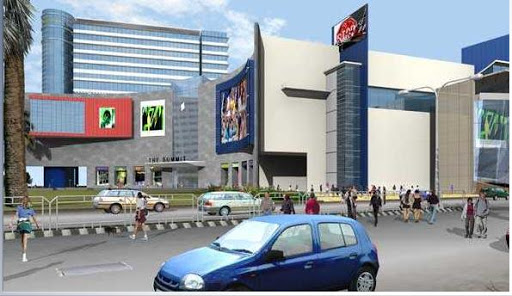
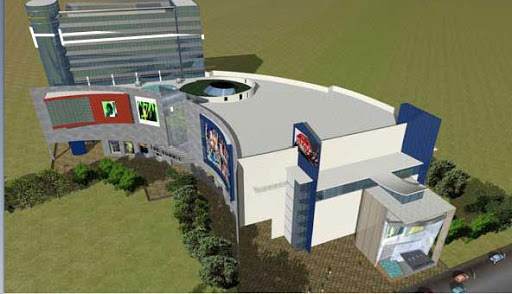
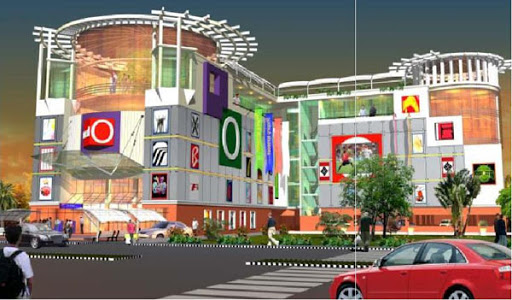
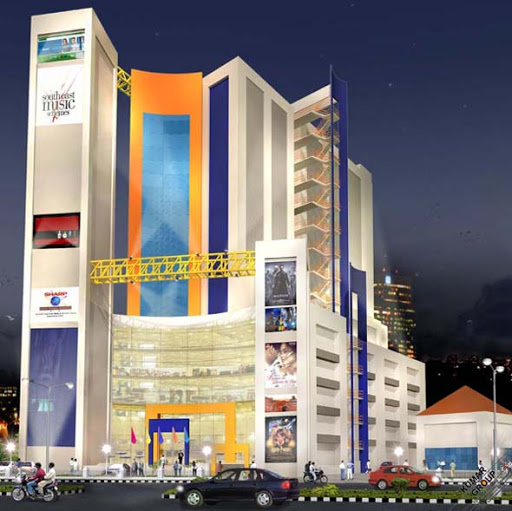
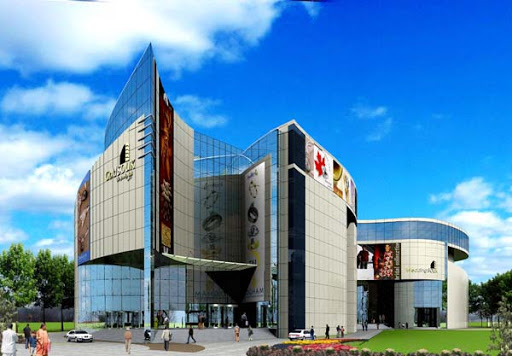
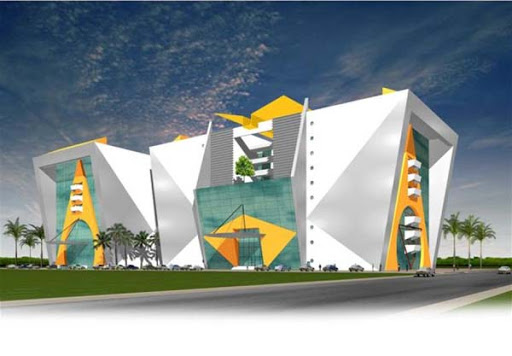
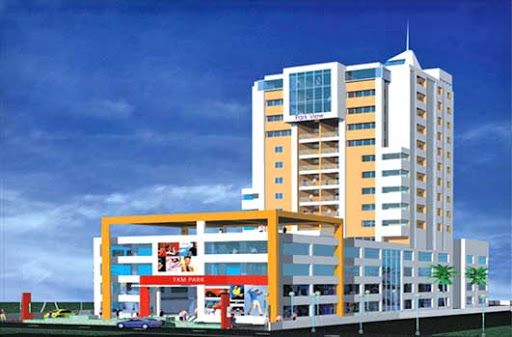
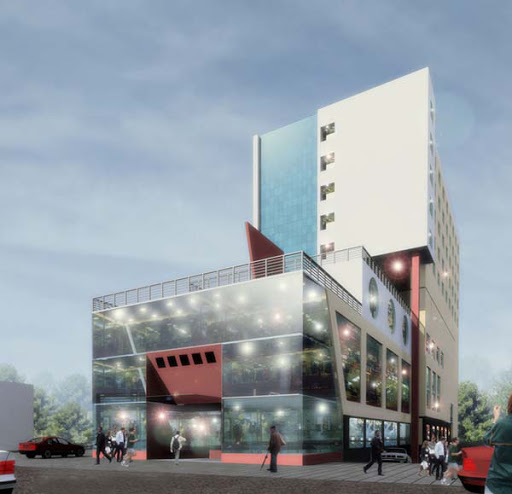
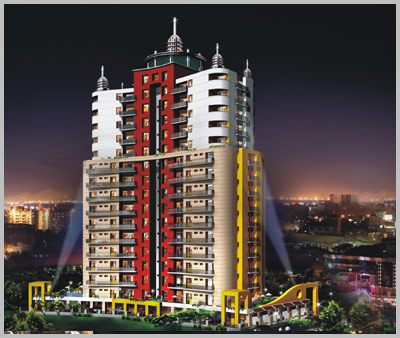
Kochi currently has no malls; however, by 2009, the city is expected to have 6 malls covering a built-up area of 1.60 million sq ft, according to Cushman & Wakefield. Malls like Forum (expected to have 1 million+ sq ft of space), Lulu Mall, Aerens Gold Souk, Abad Mall, Metro One, Mall O, The Summit (to be spread over 12 floors) and Kalyan Mall are being planned. There have been reports that DLF too is looking at a mall-cum-hotel project in the city, near Marine Drive.

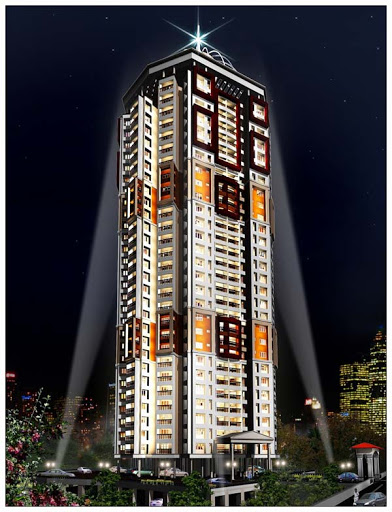
RAK Princeton, Edappally - 20 floors

RAK Princeton, Edappally - 20 floors

The Summit Mall, MG Road
Peevees Group, is in the process of setting up an international style shopping and entertainment mall in Kochi at an investment of Rs 175 crore.the project will host the first cine multiplex in Kerala


Mall O, Edappally - 350,000 sqft


Metro One Mall, Kaloor - 16 floors


Aerens GoldSouk mall, Vyttila - 450,000 sqft


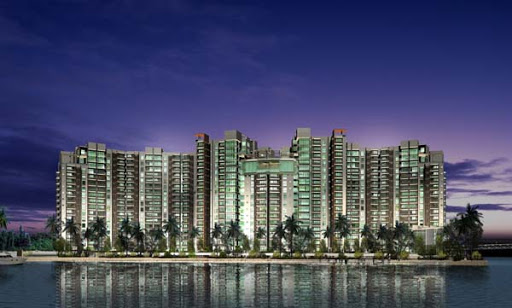
Swapnil Regency, Kakkanad - 30 floors


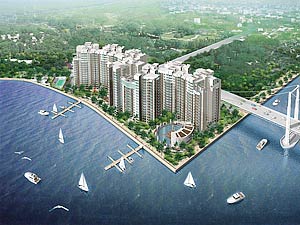
Prestige Neptune's Courtyard, Marine Drive - 18 floors


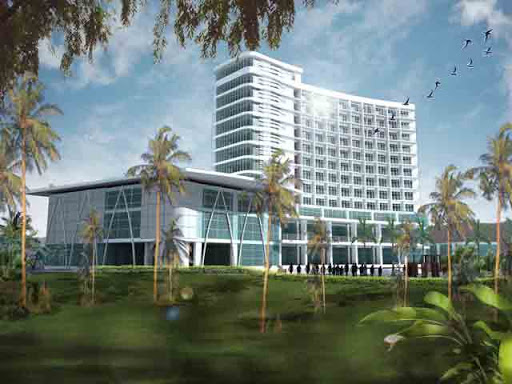
Dreams Hotel - 19 storeyed


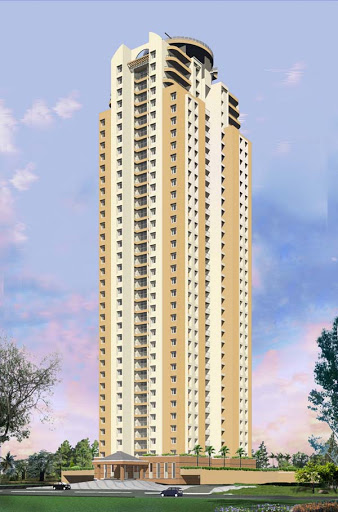
Choice Prestige, Tripunithra (40 floors)


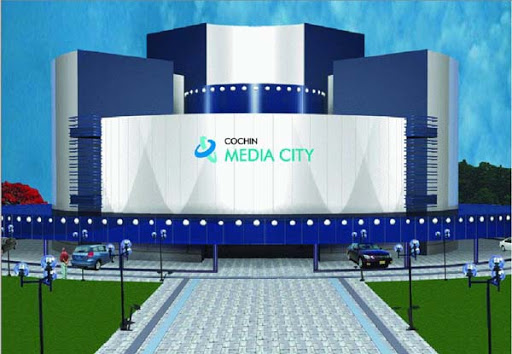
Cochin Media City


L&T Tejomaya Tech Park, Infopark Campus


Park View, Convent Road - 16 floors


A hotel-cum-mall Admiral Plaza, Palarivattom - BCG builders

Sunday, May 06, 2007

Connecting a Wireless device to a LAN

1. Bootup the windows computer (wireless device) to be connected.
2. From Start Menu, select Run, type in cmd and hit OK. This opens a black command box.
3. Type in ipconfig /all and hit enter. This will list all your logical and physical network interfaces and details.
4. Identify the interface corresponding to the wireless device using its Description. Note down the Physical Address which will look something like 00-50-EB-C0-00-A1.
5. Open up the admin console of the wireless router / access point using browser; authenticate as the admin user.
6. Navigate to the MAC Address Filter; add the Physical Address from steps above to the list. Save the list; apply the changes. Warm boot using the restart option in the admin console.
7. Using the wireless admin tool on the wireless device to connect to the network using your wireless network's SSID (KALATHUR.NET in one case I know !!) and also provide the encryption key, if there is one.
(8. Drop a comment in this blog, if this was a success or not !!)

I am well fed with these !!